Critics of South Africa’s growing export of coal to Israel have described as ‘duplicitous’, ‘egregious’ and a betrayal of Palestinians who have been subjected to a genocide by the Zionist state.
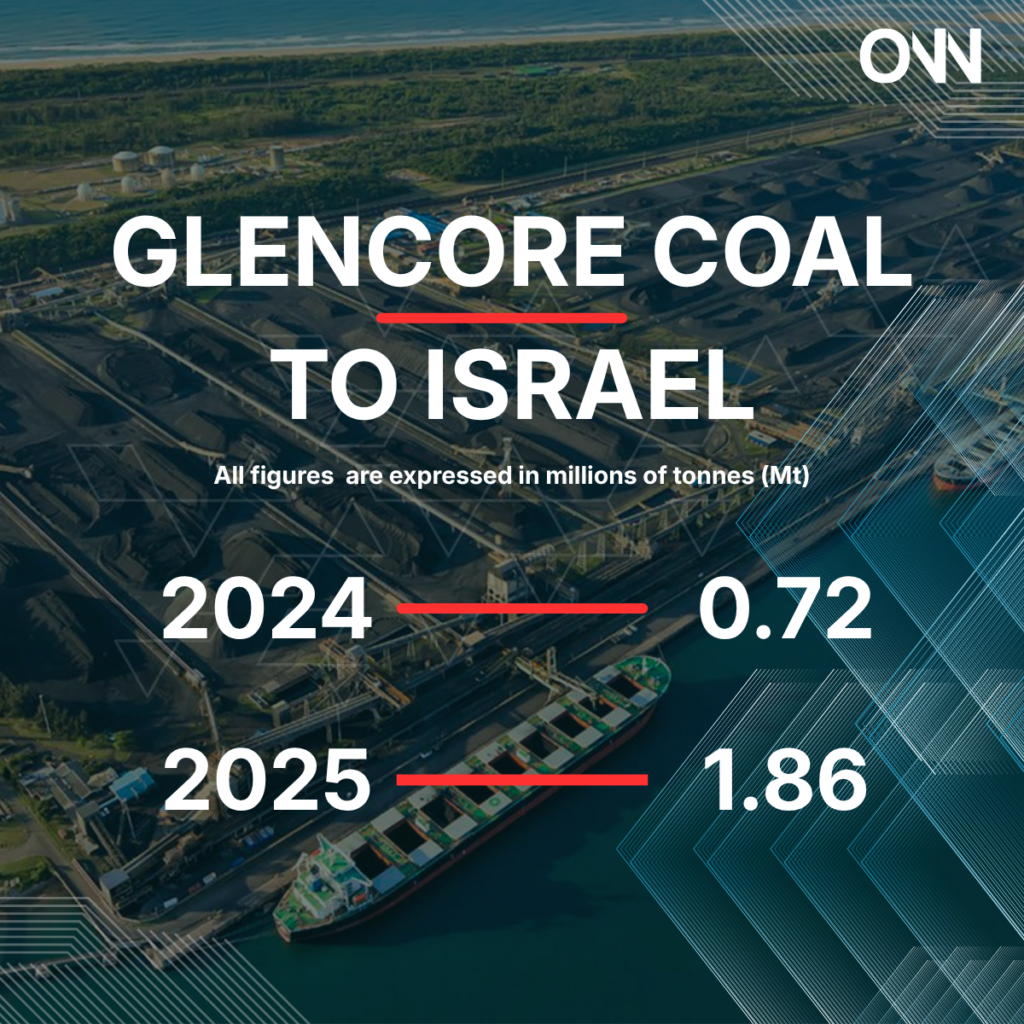
In a ground-breaking report released by SA BDS Coalition this week, South African mining companies have doubled their supply of coal to Israel in 2025.
Currently, South African mining companies supply more than half of the sea-borne coal delivered to Israel which has none of its own reserves and is dependent on imported coal to power its industries, including the munitions factories and illegal settlements.
This is confirmed in SA BDS Coalition’s thoroughly researched document which it delivered to the Department of Trade, Industry and Competition on Monday, highlighting the growing coal trade and the responsibility of government in halting the aiding of the genocide in terms of South African statutes.
The report confirms that between October 2023 and December 2025, South Africa exported about 2,99 million tonnes of coal to Israeli ports according to data from the
South African Revenue Service (SARS).
Coal has historically been one of South Africa’s principal export commodities to Israel.
Trade data obtained from TradeMap indicates that coal exports to Israel have typically
represented between approximately 1% and 3% of South Africa’s total coal exports by
value.
According to Trade Data from S&P Global Commodities, South Africa was the
third largest exporter of coal to Israel before Colombia imposed a coal embargo on
Israel.
The BDS report notes that in the first six months of 2024, Israel imported 1,4 million metric tonnes of coal with Colombia accounting for 855 700 metric tonnes – or 60% of all Israel’s coal imports during this period (according to S&P Global Commodities at Sea data).
At the time South Africa was recorded to have exported 169 200 metric tonnes in 2024. According to a report in the Mail & Guardian, exports made up approximately 25% of Israel’s coal imports for the period between 7 October 2023 to June 2025.
South Africa has since become Israel’s primary supplier of coal following Colombia’s imposition of a total coal embargo in August 2025, according to the BDS report. Colombian President Gustavo Petro justified Colombia’s decision to restrict coal exports to Israel by stating that “Colombian coal is used to make bombs to kill Palestinian children”.
The latest stats from the BDS report suggests that today, South Africa supplies 55% of Israel’s seaborne coal for 2025.
Reuters reported that South Africa increased its exports by 87% to 474 000 metric
tonnes in the three months ending November 2025 and was on track to send nearly 170 000 tonnes in December 2025, citing shipping and customs data from Kpler, LSEG, DBX
Commodities and the SARS.
Naledi Pandor on SA coal exports to Israel
The same Reuters reporting recorded that this increase pushed Israel’s total coal imports
from South Africa up 20% to 667 442 tonnes in three months, the highest level for any
three-month period since February 2017, based on official South African customs
figures. According to African Mining Market, South Africa’s coal shipments to Israel
increased by 1 million tonnes to 1.78 million tonnes.
The BDS reports makes it clear that coal exports from South Africa to Israel are thriving despite the United Nations General Assembly having voted for States to “prevent trade
or investment relations that assist in the maintenance of the illegal situation” in
Palestine.
The ICJ’s Advisory Opinion confirmed Third States’ responsibility “to take steps to prevent trade or investment relations that assist in the maintenance of the illegal situation created by Israel in the Occupied Palestinian Territory”, the Hague Group Commitments, and South Africa’s launching of the ICJ case against Israel under the
Genocide Convention, according to the BDS report.
The report is scathing of SA’s conduct.
“Against this clear and unequivocal international mandate, South Africa’s conduct is particularly egregious. Rather than acting in good faith to uphold its international obligations, State officials and corporations operating within its territory have instead exploited the vacuum created by Colombia’s principled and comprehensive coal embargo on Israel, positioning South Africa as a replacement supplier and thereby materially enabling the continuation of an unlawful situation”.
Israeli publication Ynet Global reported that following Colombian President Gustavo
Petro’s announcement to halt all coal exports “the Israeli government quickly sought alternative suppliers and received positive responses from countries including South Africa and Russia, despite their complex political stances”.
“Such opportunistic conduct not only undermines the integrity of South Africa’s
professed commitment to international law and human rights but also constitutes a
profound moral and legal failure by a State that has itself emerged from a history of
international solidarity against illegality and oppression, the report argues
In 2025, coal shipments from South Africa to Israel are projected to reach their highest levels since 2017, with the country’s share of Israel’s seaborne coal imports expected to rise to more than triple its share in 2024.
“Glencore, a multinational commodity trading firm, is the principal private actor
facilitating coal exports to Israel. The company holds a significant equity stake in the
Richards Bay Coal Terminal (RBCT) and relies on South Africa’s state-owned logistics
provider, Transnet, for rail and port operations, including the transportation, handling
and loading of coal.
Glencore manages the marketing and international sale of coal extracted from several
joint ventures and partnerships in South Africa. One such partner is Patrice Motsepe’s African Rainbow Minerals (ARM), which according to its website holds a 20,2% stake in certain Glencore coal assets.
- SEE FULL REPORT: FUELLING GENOCIDE
Although ARM has publicly denied any direct involvement in coal shipments to Israel, its equity position entitles it to a share of Glencore’s coal profits, including those derived from exports to Israeli markets. Furthermore, ARM’s 2024 Annual Report admits that a joint venture with Glencore is “governed by a management committee controlled by ARM Coal”.
As for exports, ARM brags of its “Access to Glencore SA’s interest and entitlement in the Richards Bay Coal Terminal”, the report notes.
“Despite sustained criticism from civil society organisations and international observers,
South Africa has not imposed restrictions on these exports. Notwithstanding South
Africa’s own case against Israel before the ICJ, these exports enable Israel’s ongoing
crimes: South African coal directly powers Israel’s energy grid, supplying electricity to
the Israeli military and illegal settlements in the OPT, (Occupied Palestinian territories)”, according to the report.
When viewed collectively, this information demonstrates that coal exports from South
Africa to Israel occur through a transport and export system that is materially dependent
on State-regulated infrastructure, State owned logistics networks and statutory port
authority powers. In circumstances where these exports are publicly traceable and
widely reported, the relevant organs of State cannot plausibly claim ignorance of their
occurrence.
Under both international legal standards and South African jurisprudence,
constructive knowledge and reasonable foreseeability are sufficient to trigger duties to
prevent complicity. In the present context, continued coal exports to Israel in the face
of well documented allegations of genocide and grave international crimes can no
longer be characterised as neutral commercial activity but constitute high risk
engagements that require immediate regulatory intervention.
Coordinated boycotts and embargos can therefore stifle the Israeli war machine, according to the report, and South Africa is obligated to take all action within its power to stop the ongoing genocide and illegal occupation.
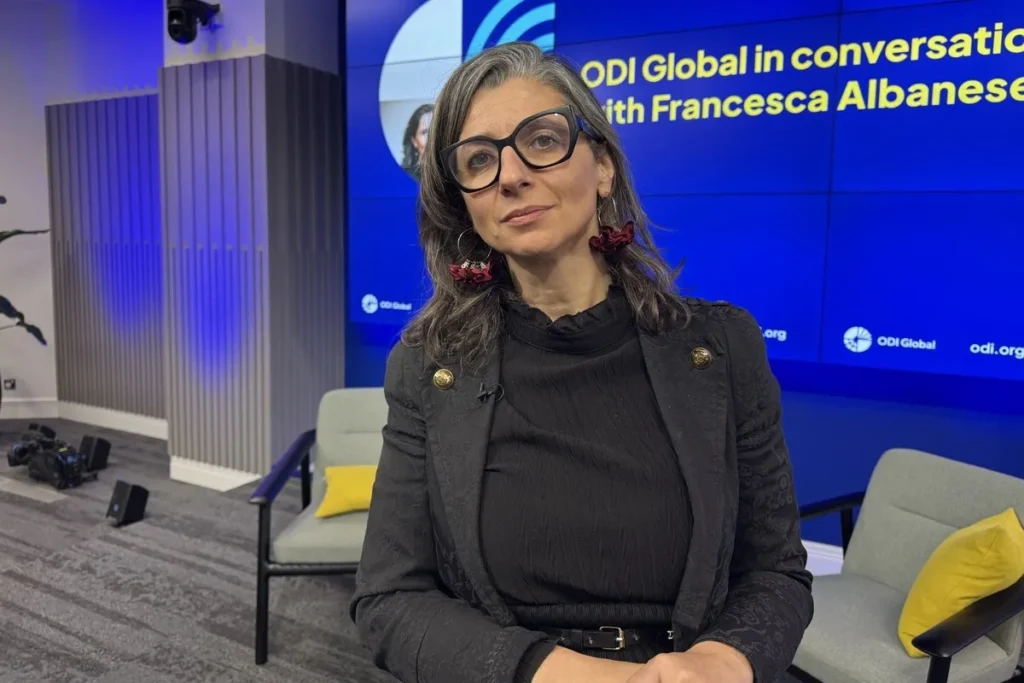
Francesca Albanese, the UN’s special rapporteur on the occupied Palestinian territories, named South Africa and Glencore as direct contributors to and complicit in what she has termed the “economy of genocide”.
This describes a system wherein financial, commercial and market structures not only tolerate but actively profit from, sustain or incentivise the acts of mass violence, destruction and institutionalised oppression (including genocidal acts currently being committed by Israel).
South African companies, their directors as well as government officials involved (particularly those officials who fail to use their authority to prevent such trade) are thereby exposed to criminal and civil accountability under international and domestic law for their participation in the economy of genocide, the report argues.

