

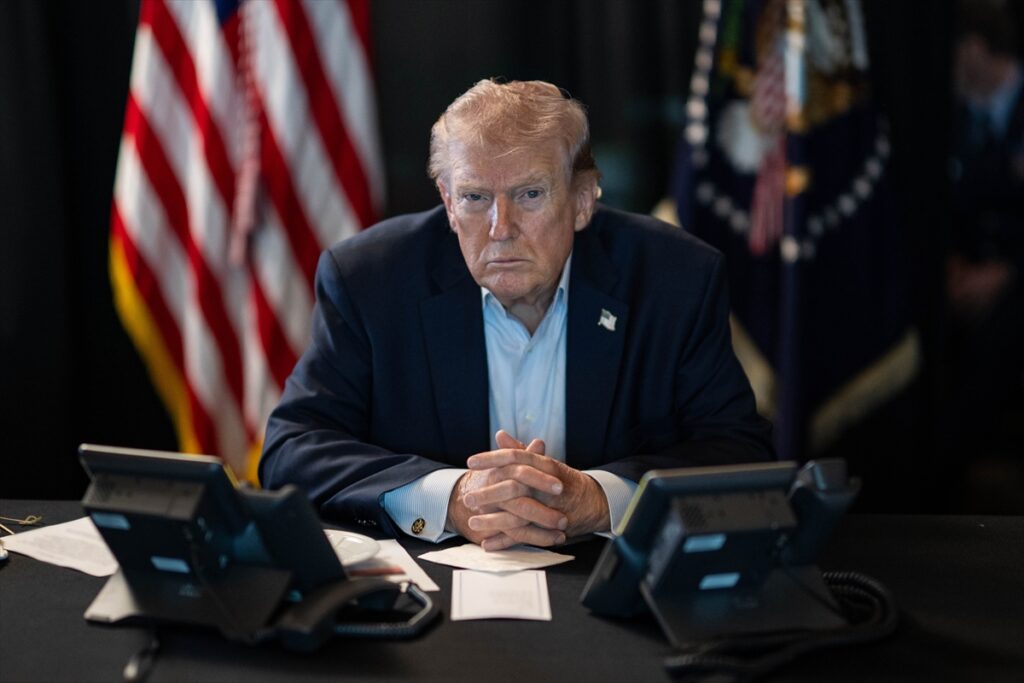
As fighting in the Middle East entered its third week, US President Donald Trump turned up the pressure on European countries that failing to help secure the Strait of Hormuz would be “very bad for the future of NATO”.
Some European countries have reluctantly agreed to send warships and other assistance, but with many saying the Iran war “was not of our choosing”.
Since the US and Israeli airstrikes commenced on 28 February, the Spanish government, led by Prime Minister Pedro Sánchez, denied US forces permission to use joint military bases at Rota and Morón for operations against Iran, leading to threats of trade sanctions from Trump.

Sánchez framed Spain’s position with the phrase “no to war,” drawing parallels to opposition against the 2003 Iraq War. In response to the conflict’s regional spill-over, Spain deployed a frigate to Cyprus to provide defensive support following Iranian drone strikes on the island. Domestically, the war prompted protests in cities such as Madrid, where demonstrators expressed opposition to the US-led actions. Spain also withdrew its ambassador from Israel amid broader tensions related to the war and ongoing issues in Gaza.
Spain’s stance highlighted divisions within NATO and the European Union, with Spain distancing itself from allies like France, Germany, and the United Kingdom that adopted more supportive positions toward the US operations.
British Premier Sir Keir Starmer reiterated on Monday that although he had been attacked by some for refusing to join the offensive against Iran, he stood by his principle in spite of criticism from Trump.
‘We will not be drawn into a wider war.”
‘Iran has nothing to do with NATO, this is not NATO’s war, ‘ the German Chancellor Friedrich Merz’s spokesperson said.
In South Korea, street protests have erupted in Seoul, and the country’s main opposition People Power Party (PPP) said Monday that any decision to dispatch warships to help the US naval forces keep the Strait of Hormuz open would require parliamentary approval, local media reported.
“The issue of deploying our military to a region with a high possibility of involvement in combat would be a grave decision,” said Song Eon-seog, a party leader.
“This is a matter that requires the National Assembly’s approval in accordance with the Constitution and relevant laws,” Seoul-based Yonhap News quoted Song as saying.
His remarks came as Trump called on China, France, Japan, South Korea, the UK, and other countries, affected by the closure of the Strait of Hormuz by Iran, to send ships to keep the strait “open and safe” as oil prices soar due to the ongoing US-Israeli war on Iran and Tehran’s retaliatory attacks in the region.
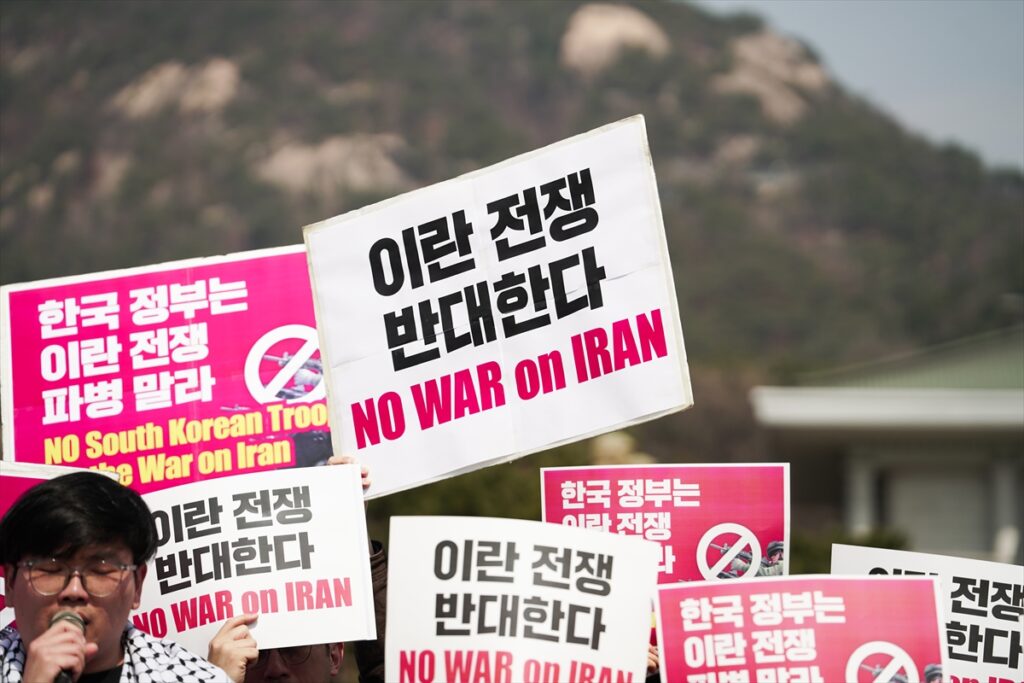
The issue of deploying the Cheonghae naval unit, currently located in the Gulf of Aden for anti-piracy operations, to the Strait of Hormuz would require parliamentary approval, and it would effectively change the original purpose of the unit’s deployment, Song noted.
The South Korean Presidential Office on Sunday said that Seoul would “carefully” deliberate its response to Trump’s request.
Iran has effectively closed the Strait of Hormuz since March 1, following the launch of joint attacks by Israel and the US against Iran on Feb. 28, which have so far killed around 1,300 people, including then-Supreme Leader Ayatollah Ali Khamenei. Hostilities have since escalated. Tehran has retaliated with drone and missile strikes targeting Israel, Jordan, Iraq, and Gulf countries that are home to US military assets, resulting in casualties and damage to civilian infrastructure.
Before the war began, about 20 million barrels of oil passed through the strait daily. Its disruption has pushed up oil prices. As the war entered its third week, Mr. Trump said that member nations of NATO should help open up the narrow waterway for oil tankers or face a “very bad” future.
“If there’s no response or if it’s a negative response, I think it will be very bad for the future of NATO,” he told The Financial Times in an interview on Sunday.
Trump said China should also help unblock the strait, and threatened to postpone a planned April summit in Beijing with Xi Jinping, China’s leader, if it did not comply. Iran is allowing ships carrying oil to China to cross the strait, but other oil tankers have been attacked by projectiles, according to the New York Times.
Asked on Monday about Trump’s comments, a spokesman for China’s foreign ministry said that both sides were still discussing his trip to Beijing. The spokesman, Lin Jian, added that China was committed to de-escalation in the Middle East and was maintaining communication “with all relevant parties regarding the current situation.”
Australia’s transport minister, Catherine King, said Monday that her country does not intend to send ships.
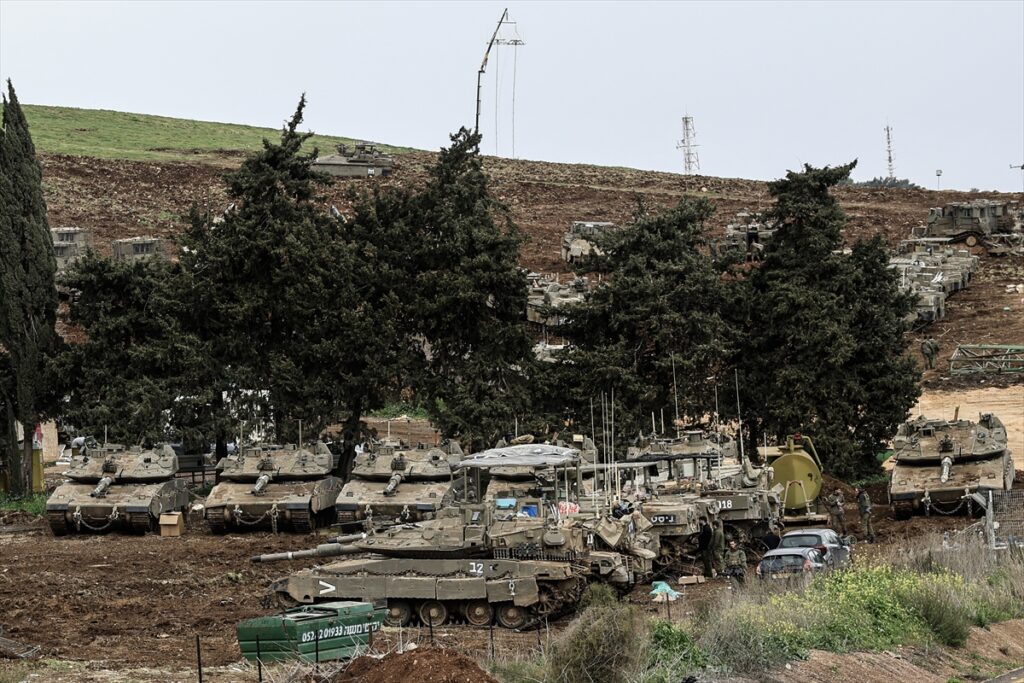
The Israeli military said early on Monday in the Middle East that it was targeting government infrastructure in Tehran with a “broad wave of attacks,” after having conducted strikes earlier in Beirut, Lebanon. Airstrikes again targeted Tehran’s domestic airport, Mehrabad, and a black plume of smoke was rising from the airport, according to several residents of Tehran.
In Iraq, an Iran-allied militia, Kataib Hezbollah, said it launched two drone strikes at the U.S. diplomatic logistics site at Baghdad International Airport early Monday. An Iraqi official who was not authorized to speak publicly said both strikes were intercepted.
In Dubai, flights were briefly suspended at Dubai International after the authorities said they responded to a fire from “a drone-related incident” nearby that had caused damage to a fuel tank. Civil defence teams were bringing the fire under control, and no injuries were reported. – ONN Reporter, AA